


Paladin: Learn History
4.5966.00 Reviews
App Specs
- Version
- 6.6.0
- Updated On
- License
- Free
- Downloads
- 500,000+
- Developer
- Deepstash SRL
- Categories
- Education
- Platform
- Android
Screenshots


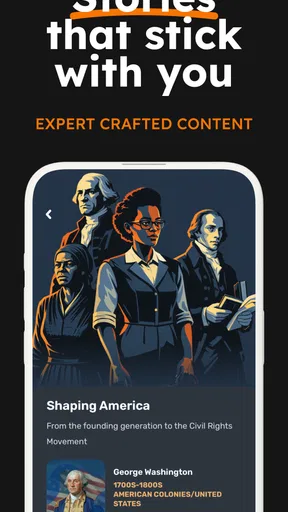
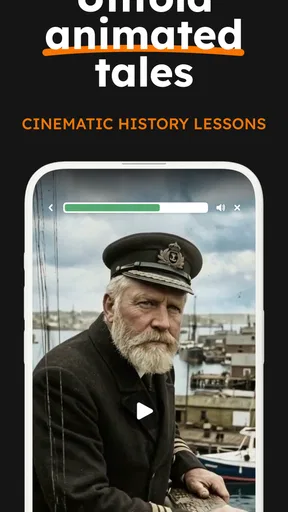
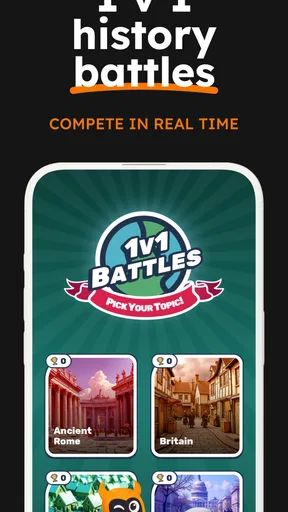



 Analysis by AppCompare
I’m always looking for ways to make spare moments feel less disposable, and Paladin: Learn History caught my attention because it turns historical subjects into interactive stories rather than another reading assignment. It is an education app from Deepstash SRL, aimed at anyone who wants to approach the past through choices and narrative. My overall impression is that its appeal depends on enjoying that format: it can make history feel inviting, but it is not a substitute for a textbook or a carefully sourced course.
What the free starting point means
The app is free to download, which makes it easy to try before deciding whether it suits you. It also offers in-app purchases, with listed item prices ranging from $12.99 to $89.99. That is the useful distinction when weighing cost: getting started does not require paying, while some purchases can be much more of a commitment. I would explore the free experience first and only consider spending if the stories and learning style are already working for me.
That range is wide enough that I would not treat “free” as a promise that every part of the experience costs nothing. Before buying, I’d check what a specific purchase includes and whether it is a one-time item or something else; the price alone does not answer that. If you prefer to know the full cost of a learning resource in advance, a book or a course with a clearly stated single price may be easier to budget for.
Where the learning value comes from
What I find promising about this approach is the chance to connect a decision with its historical setting. A fact encountered inside a dilemma can be easier to remember than one read in isolation, especially for someone who learns best by following a story. The interactive format also gives you a reason to pay attention to context: choices make more sense when you understand the pressures and limits people faced at the time.
I’d use it as a doorway into a subject, not as the final word on it. A good follow-up habit is to pause after a chapter or scenario and write down one question it raised, then check that question in a book or a reputable reference source. That simple step helps separate the app’s storytelling from broader historical evidence and turns a short session into a more deliberate learning routine.
Trade-offs to keep in mind
Interactive history asks you to engage with a constructed scenario, so I would not confuse a compelling choice with proof that events could have unfolded exactly that way. The format can make a period memorable, but it may also simplify complicated causes into a sequence of decisions. If your priority is detailed scholarship, citations, or a systematic survey of a period, a history book, lecture series, or reference resource is likely to serve you better.
There is also a difference between learning through a story and testing yourself on facts. If you need a structured study plan for an exam, check whether the app’s material matches your syllabus rather than assuming an engaging historical adventure covers the required topics. I’d pair it with notes or a course when accuracy, breadth, and exam preparation matter more than keeping a session entertaining.
Worth Reading Before You Choose

EA SPORTS FC Mobile 26 Is a Bigger Football Game, but It Takes Time

Flipboard Shows What News Apps Must Do Beyond the Feed

Switching to Android Auto Means Rethinking Your Driving Routine

Google Calendar Makes a Crowded Week Easier to Manage

Ludo King Makes the Most of the Minutes Between Plans

Baby Panda World Brings Quick Play to Modern Phones, but Its Game Library Feels Busy
Who is likely to get value
I can see this working particularly well for a curious learner who tends to abandon long readings, a student looking for a more approachable way into a topic, or someone who enjoys narrative games and wants their leisure time to feel a little more informative. A practical routine would be to open it during a commute or a quiet break, follow one story at a time, and save the questions that deserve further reading for later. That is a more useful goal than trying to rush through several periods in one sitting.
It may be the wrong fit if you want a searchable encyclopedia, a chronological reference you can consult quickly, or a course that lays out learning objectives from the start. Those tools are better for looking up a specific date or building a complete overview. Paladin’s strength is the invitation to engage with a historical situation; its value is less clear for someone who wants information presented plainly and efficiently.
The app is rated for Everyone, has an average rating of 4.6 from around 11,000 ratings, and has reached over 100,000 installs. It was released on October 1, 2024, and version 4.4.0 is the current version. I’d still judge it by whether its format works for you: popularity can reassure a first-time downloader, but it cannot tell you whether you prefer interactive stories to reading or listening.
Immersive Historical Adventures
The first thing that struck me about Paladin: Learn History is its unique approach to teaching history. Instead of just reading about events from the past, you get to experience them first-hand. The app places you in the shoes of historical figures, allowing you to make decisions that could change the course of history. It's like a choose-your-own-adventure book but way cooler.
Each scenario is crafted with meticulous attention to detail. From the vibrant visuals to the authentic soundscapes, it’s clear that a lot of love has gone into bringing these stories to life. I found myself transported to ancient Rome, medieval Europe, and even the American Revolution, all within the span of a few hours.
Gameplay Mechanics
If you're worried about the gameplay being too complex, don’t be. The mechanics are intuitive and easy to grasp. You’re given a series of choices and tasks, and the outcomes depend on your decisions. It’s a simple tap-and-swipe interface, making it accessible for everyone, from history buffs to casual gamers.
What really keeps you hooked is the way the game integrates learning with fun. You’re not just memorizing dates and facts; you’re living the moments that shaped the world. I found myself learning without even realizing it, which is a rare feat for an educational app.
Engaging Storylines
The narrative is where Paladin: Learn History truly shines. Each historical period is presented through a gripping storyline that keeps you wanting more. Whether you're navigating the political intrigue of the Tudor court or exploring the vast empire of Genghis Khan, the stories are rich with detail and full of unexpected twists.
The app also does a fantastic job of incorporating lesser-known historical facts, which was a delightful surprise. It’s like finding hidden Easter eggs that make the whole experience even more rewarding.
Educational Value
Okay, let's talk education. The app is designed to be both instructive and entertaining, and it nails both aspects. You’re given context for each scenario, and the app provides additional resources if you want to delve deeper into any topic. It’s a perfect blend of gaming and learning, making it suitable for students and anyone with a thirst for knowledge.
The quizzes and challenges sprinkled throughout the game are a great way to test your knowledge. They’re cleverly integrated into the storyline, so they don’t feel like a chore but rather a fun way to consolidate what you’ve learned.
Final Thoughts
In the end, Paladin: Learn History is more than just an app; it’s an experience. It brings history to life in a way that’s both educational and entertaining. Whether you’re a student, a history lover, or just someone looking for a fun way to kill time, this app is definitely worth a download.
So, if you’re ready to embark on a journey through time and make some history of your own, give Paladin: Learn History a try. Who knew learning could be this much fun?
A practical way to fit it into the day
For me, the best use is a short, focused session rather than treating the app like a course I need to finish in order. Imagine waiting for a delayed appointment: I’d choose a historical story, pay attention to the context before making a decision, and stop when I’m ready to leave. Later, I could jot down the unfamiliar person or event and look it up elsewhere. This keeps the app enjoyable while giving the session a small, concrete learning outcome.
One useful habit with branching stories is to notice which choices are based on what you know and which are guesses. If a decision surprises you, that is a natural cue to revisit the explanation or seek another source, rather than replaying only to find the “right” outcome. In history, the point is not necessarily to win a scenario; it is to understand why a choice seemed possible in its context and what the story leaves out.
How it compares with other ways to learn history
Compared with a history podcast, Paladin asks for more active attention: you make choices instead of only listening. That can suit a learner who gets distracted by audio, although a podcast is easier when your hands and eyes are occupied. Compared with a textbook, the app is more inviting for casual exploration but less dependable as a complete, organized reference. I’d choose based on the job: use the interactive format to spark interest, then turn to books, lectures, or reference works when you need coverage and depth.
It also differs from a conventional quiz app. Quizzes are useful for retrieval practice, but they can reduce a topic to isolated answers. A narrative can help connect decisions and circumstances, while a quiz can reveal what you actually remember. If I were studying for a test, I would not choose between them; I’d use a story to build interest and a syllabus-aligned resource to check coverage and recall.
Small choices that make sessions more useful
I would avoid trying to treat every outcome as a historical verdict. The decision-making is a way into the material, not a guarantee that the scenario represents every perspective or the full complexity of an event. When a storyline presents a dramatic turning point, I’d ask myself what social conditions, groups, or long-term causes sit outside the immediate choice. That question helps keep the engaging format from becoming an overly neat explanation of the past.
Another practical tip is to make a tiny “look this up later” list rather than interrupting every scene to research. A few names or terms are enough. This preserves the story’s momentum, while a later check can help distinguish a memorable detail from a well-supported broader account. It is a simple workflow, but it makes the app more useful for curious learners who want to go beyond a quick diversion.
For families, the Everyone age rating makes the app broadly accessible, but I would still use the content as a chance to talk through what a historical choice means rather than assume every child will take the same lesson from it. A parent or teacher can ask what information the character had, what pressures shaped the decision, and what the narrative may have simplified. That conversation can turn an individual phone session into a more thoughtful learning activity.
Making the purchase decision
So, would I pay? I would begin with the free download and see whether I naturally return to the stories. If I mainly want a quick way to explore history and the free access meets that need, there may be no reason to buy anything. If a paid item offers material I genuinely want to continue with, I’d compare its stated contents and price with the cost of a book or other learning resource before committing. The listed purchase range is broad, so I would never assume that every item has the same value or scope.
My recommendation is a try-before-you-buy one. Paladin is a good candidate for learners who enjoy making choices, following a narrative, and using a story as a launch point for further reading. I would skip it if I needed a rigorously structured curriculum, a fast fact-checking tool, or a clearly bounded total cost before exploring. For everyone else, the free starting point makes it reasonable to test the format and decide from actual use rather than the promise of a historical adventure.
Pros
- Engaging historical narratives.
- Interactive learning modules.
- Visually appealing design.
- Regular content updates.
- User-friendly interface.
Cons
- Limited offline access.
- In-app purchases can add up.
- Requires a stable internet connection.
- Some content may feel repetitive.
- Notifications can be intrusive.
FAQs for Paladin: Learn History
What is the main objective of Paladin: Learn History?
Paladin: Learn History aims to make learning about historical events engaging and interactive. Through immersive storytelling and challenging quizzes, it helps users explore different eras, understand key events, and connect with historical figures. The app combines education with entertainment, making history accessible and enjoyable for all ages.
Is Paladin: Learn History suitable for all age groups?
Yes, Paladin: Learn History is designed to be suitable for a wide range of age groups. It offers various difficulty levels and content tailored for different age brackets, from young learners to adults. Parents can rest assured that the material is educational and age-appropriate, fostering a love for history in a safe environment.
Does the app require an internet connection to function?
While Paladin: Learn History offers some offline features, such as reading materials and basic quizzes, an internet connection is necessary for accessing full content, updates, and interactive features. Regular online access ensures you receive the latest historical events and newly added quizzes to enhance your learning experience.
Are there any in-app purchases or advertisements?
Paladin: Learn History offers a free version with limited features and occasional advertisements. For an ad-free experience and access to premium content, users can opt for in-app purchases or a subscription model. This allows for an enhanced experience, with exclusive quizzes and deeper dives into historical topics.
What devices are compatible with Paladin: Learn History?
Paladin: Learn History is compatible with both Android and iOS devices, including smartphones and tablets. It requires a minimum operating system version to ensure optimal performance, which users can check in the respective app store. Regular updates help maintain compatibility with newer devices and operating systems.


